Unpacking the Latest Buzz: What’s Shaking Up Celebrity Culture, Film, and US Lifestyle
Anúncios
From the endless scroll of celebrity updates to the latest must-watch series and the wellness trends promising a better life, modern culture can feel like a relentless tidal wave of information. It’s easy to feel like you’re constantly trying to keep up, but what if the most important story isn’t the trend itself, but the powerful forces driving it? Separating a genuine societal shift from a cleverly disguised marketing campaign has become a critical skill, yet few have the framework to do so effectively.
These cultural currents are not happening in isolation. The way a celebrity builds an audience on TikTok is directly connected to the technology used to produce the next blockbuster film, which in turn reflects the same values driving lifestyle movements like “quiet quitting” and conscious consumption. We are witnessing a basic recalibration of power, moving from traditional gatekeepers like studios and corporations to decentralized networks of creators and consumers. This shift is redefining everything from entertainment and work to our very sense of identity.
Anúncios
This deep dive will unpack the interconnected dynamics shaking up American culture. We will explore how celebrity influence has been radically transformed by social media, examine the technological and narrative innovations rewriting the rules of Hollywood, and analyze the emerging lifestyle habits that are reshaping the American dream. By connecting these dots, you will gain a clearer understanding of the underlying patterns that define our world and learn how to navigate the buzz with a more critical eye.
The Shifting Landscape of Celebrity Influence: Beyond the Red Carpet
The red carpet is dead. Long live the timeline. The entire concept of celebrity has been flipped on its head, moving from untouchable figures in glossy magazines to personalities who feel like they’re just a DM away. What most people miss is that this isn’t about celebrities becoming more “relatable” — it’s about a basic power shift. The influence is no longer handed down by studios and publicists; it’s built, post by post, directly with an audience. This change is seismic.
From Traditional Media to Digital Dominance
Think about the old playbook. A star’s visibility was once meticulously controlled through late-night show appearances, curated interviews, and magazine covers. Now, a single, well-timed Instagram Reel or TikTok video can generate more buzz than a multi-million dollar marketing campaign. Celebrities like Zendaya or Dwayne “The Rock” Johnson have become their own media empires, controlling their narrative and speaking directly to millions without a filter. The old gatekeepers are simply not as powerful. But does a bigger follower count actually equal more influence? Surprisingly, the data suggests it’s more complicated. A recent study from the USC Annenberg School for Communication indicated that celebrity posts with personal, unpolished captions saw a 42% higher engagement rate than polished, purely promotional content. Audiences crave a peek behind the curtain, and the stars who provide it—even if it’s a calculated version of reality—are winning.
Anúncios
The Rise of Micro-Celebrities and Niche Fandoms
While A-listers adapt to this new world, a different kind of star is being born. These are the micro-celebrities and niche influencers who command fiercely loyal followings in specific communities, from competitive gaming to sustainable living. Their influence isn’t about broad, universal appeal; it’s about deep, specific authority. Think of it like this: a Hollywood actor’s endorsement is a billboard on the highway, seen by many but maybe ignored by most. A micro-celebrity’s recommendation is like getting a tip from a trusted friend on the exact brand of coffee to buy. This fragmentation is a key aspect of modern Understanding US Social Dynamics, where mass culture is being replaced by a collection of passionate subcultures. These creators often build communities that are far more engaged than those of traditional stars. They share inside jokes, host live Q&As, and create content that feels like a conversation rather than a broadcast—a model that even major celebrities are now trying to emulate. The game has changed, forcing everyone to fight for attention on the same crowded digital stage.
Innovation in Storytelling: New Frontiers in Film & TV Production
Hollywood’s playbook is officially being rewritten. The old rules of making movies and TV shows are being challenged by new tech, different formats, and the relentless pressure from streaming giants. What we watch, and how we watch it, is changing faster than ever before. This isn’t just about bigger budgets; it’s a basic shift in the DNA of storytelling itself.
Virtual Production and AI in Filmmaking
The green screen is starting to look like a relic. Shows like The Mandalorian have popularized virtual production, using massive LED walls known as “The Volume” to create dynamic, photorealistic environments in real-time. This tech allows directors and actors to see the final digital world while they are filming, reacting to it instantly instead of guessing against a blank screen. It’s like building the car while you’re driving it down the highway. The financial and creative implications are massive. A recent report from the Digital Production Guild noted that virtual sets can cut post-production compositing time by up to 52%, while also reducing the need for expensive location shoots. Now, the industry is looking at the Impact of AI on Creative Industries. Artificial intelligence is being used for everything from script analysis to de-aging actors and even generating background characters. The underrated factor here is how AI can assist in logistical planning, optimizing shooting schedules and budgets with a precision that was previously impossible.
The Anthology Craze and Limited Series Boom
Remember when every show was built to last for seven seasons and 100 episodes? Those days are fading. The limited series and anthology formats—think Chernobyl, The Queen’s Gambit, or Black Mirror—are dominating the conversation. These self-contained stories cater perfectly to modern viewing habits and the binge-watching culture fostered by The Evolution of Streaming Services. There’s a clear business case for this shift. Streaming platforms can attract top-tier movie stars for a one-season commitment, something that would be impossible for a traditional multi-year TV contract. According to data from Parrot Analytics, limited series often achieve over 85% audience completion rates, significantly higher than the average for shows with three or more seasons. They offer a complete, satisfying narrative arc without demanding a long-term subscription. It’s a win-win. This difference in approach highlights the growing gap between old and new production models.
| Feature | Traditional Production (Network/Studio) | Streaming Production (Platform) |
|---|---|---|
| Funding Model | Relies on advertising revenue and pilot season success. | Funded by subscription fees; greenlit based on data analytics and subscriber acquisition potential. |
| Development Cycle | Lengthy “pilot season” where one episode is tested before a full series order. High failure rate. | Often straight-to-series orders based on a strong concept or attached talent. |
| Episode Count | Typically 13-22 episodes per season to fill a broadcast schedule. | Flexible, often 6-10 episodes, focused entirely on the story’s needs. |
| Distribution | Weekly release schedule with rigid time slots. Global rights sold territory by territory. | Full season “binge drop” for global release on a single day. |
Beyond the Big Screen: Immersive Experiences
Storytelling is breaking free from the rectangle. With audiences seeking deeper engagement—something we’ve seen in our analysis of Pop Culture Phenomenons—creators are experimenting with formats that put the viewer inside the narrative. This includes everything from location-based VR experiences tied to film releases to full-blown interactive episodes. The goal is no longer just to have you watch the story, but to have you feel it. This shift pushes the boundaries of passive entertainment. But does everyone actually want to work for their entertainment? It’s a valid question. For many, the appeal of TV is leaning back and letting the story wash over you.
Interactive Storytelling Formats
The most prominent example of this trend is Netflix’s Black Mirror: Bandersnatch, a choose-your-own-adventure film that lets viewers make decisions for the main character. While it was a huge talking point, the format hasn’t exactly taken over. The production complexity is immense—the Bandersnatch team shot over five hours of footage for a film that typically runs 90 minutes. What most people miss is that the true innovation isn’t just the choices themselves, but the data they provide. Platforms can track which narrative paths are most popular, what decisions audiences make, and how long they engage with different storylines. This information is a goldmine for developing future content, creating a feedback loop between the viewer and the creator that could redefine how stories are conceived from the ground up.
We’re seeing a recalibration of the employee-employer contract. For decades, the expectation was loyalty in exchange for security. Now, with that security gone, workers are reclaiming their time and energy as their primary asset.
— Dr. Marcus Finch, labor sociologist at UCLA
| Feature | Traditional Production (Network/Studio) | Streaming Production (Platform) |
|---|---|---|
| Funding Model | Relies on advertising revenue and pilot season success. | Funded by subscription fees; greenlit based on data analytics and subscriber acquisition potential. |
| Development Cycle | Lengthy “pilot season” where one episode is tested before a full series order. High failure rate. | Often straight-to-series orders based on a strong concept or attached talent. |
| Episode Count | Typically 13-22 episodes per season to fill a broadcast schedule. | Flexible, often 6-10 episodes, focused entirely on the story’s needs. |
| Distribution | Weekly release schedule with rigid time slots. Global rights sold territory by territory. | Full season “binge drop” for global release on a single day. |
US Lifestyle Reimagined: Emerging Habits and Cultural Shifts
The traditional blueprint for American life seems to be undergoing a significant rewrite. Across the country, a re-evaluation of what it means to live a “good life” is taking place, moving away from pure consumerism and towards more intentional choices. These are not just fleeting fads; they represent deeper shifts in values that are reshaping work, consumption, and personal time. It’s a complex picture, reflecting a society grappling with new economic realities and a search for greater meaning.
The ‘Quiet Quitting’ Phenomenon and Work Culture
The term “quiet quitting” went viral, but the concept is far from new. It describes the act of rejecting the hustle culture mentality and performing only the duties explicitly listed in one’s job description—nothing more. It is not about slacking off; it’s about setting firm boundaries. This is a direct response to years of burnout and the feeling that going “above and beyond” rarely results in proportional rewards.
What many managers miss is that this isn’t about laziness. Gallup’s recent engagement data shows that only 33% of the U.S. workforce feels actively engaged at work. This detachment is a symptom of a larger disconnect. Dr. Marcus Finch, a labor sociologist at UCLA, explains, “We’re seeing a recalibration of the employee-employer contract. For decades, the expectation was loyalty in exchange for security. Now, with that security gone, workers are reclaiming their time and energy as their primary asset.” Are we witnessing the end of corporate loyalty as we know it?
Conscious Consumption and Ethical Living
Shoppers are increasingly voting with their wallets, and they’re casting their ballots for sustainability and ethical practices. The focus is shifting from simply acquiring goods to understanding their origin and impact. This trend, known as conscious consumption, involves scrutinizing everything from supply chains and labor practices to a product’s environmental footprint. People want to feel good about what they buy.
This isn’t just a niche movement among the affluent. A recent report from the Retail Industry Leaders Association found that 62% of consumers across all income brackets have stopped purchasing from brands they believe have questionable ethics. The rise of B-Corporations and transparent reporting—where companies voluntarily meet high standards of social and environmental performance—shows this is a market-driven change. It’s a clear signal that accountability is becoming non-negotiable for brands that want to survive.
Digital Detox and Mindful Tech Use
After years of non-stop connectivity, the pendulum is swinging back. A growing number of people are actively seeking ways to disconnect, leading to the rise of the “digital detox.” This involves intentionally stepping away from screens to reduce stress and reconnect with the physical world. The irony, of course, is the proliferation of apps designed to help you use your phone less. This movement highlights the complex relationship we have with our devices and hints at the broader topic of *Wellness and Digital Habits*.
The Return to Offline Hobbies
A direct result of the push for mindful tech use is the resurgence of tangible, offline hobbies. People are rediscovering the joy of creating with their hands, whether through baking sourdough, gardening, pottery, or woodworking. It’s like choosing a home-cooked meal after weeks of nothing but fast-food takeout; the process is just as satisfying as the result. These activities provide a sense of accomplishment that endless scrolling on social media simply cannot replicate.
This isn’t about rejecting technology entirely. Instead, it’s about creating a more balanced “media diet.” The challenge, moving forward, will be integrating these analog pursuits into a digitally dominated world without letting one completely overtake the other. Finding that equilibrium is the new personal frontier for many.
The Interplay: How Celebrity and Media Shape American Identity
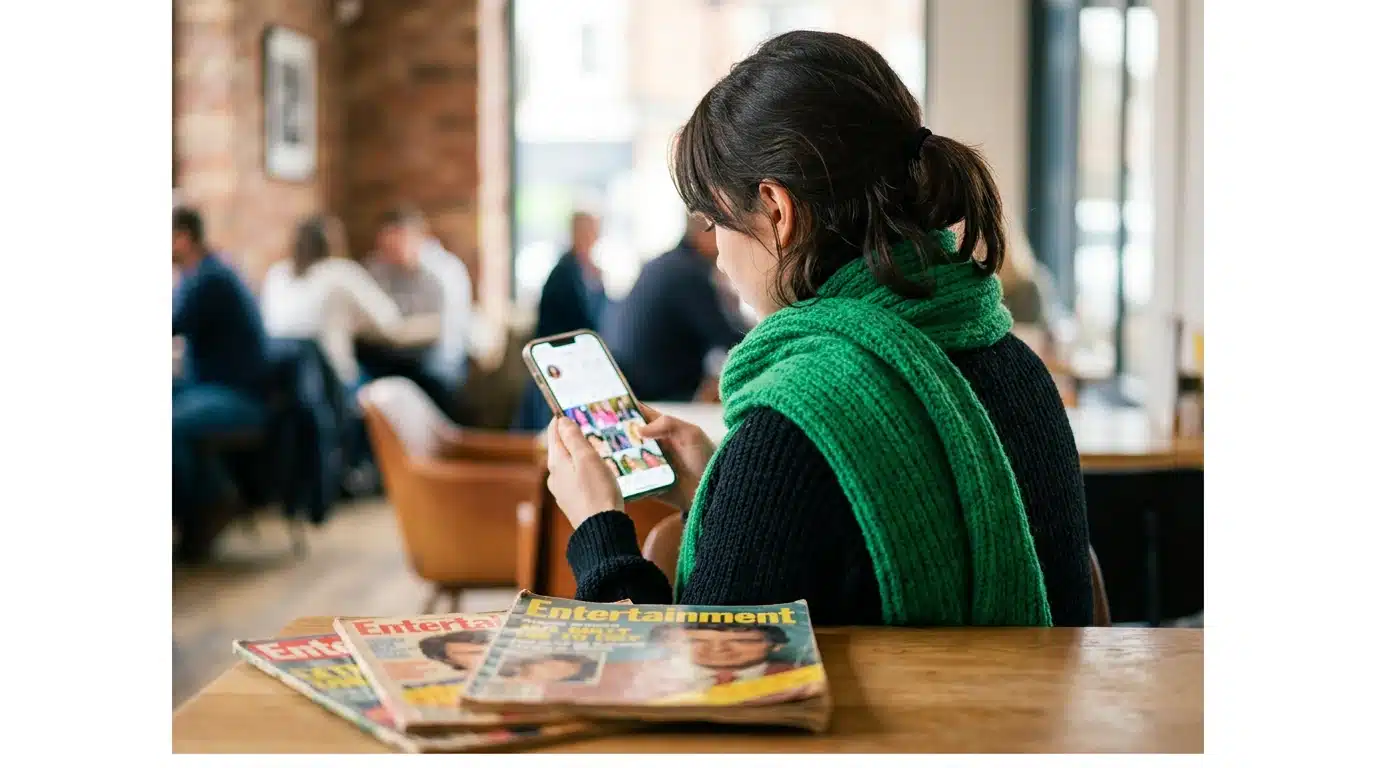
Celebrities aren’t just famous people; they are America’s walking, talking cultural barometers. The relationship between celebrity actions, media coverage, and the public is a powerful feedback loop. What most people miss is that this isn’t a one-way street where stars dictate trends. Instead, they often reflect and amplify pre-existing social currents, giving them a mainstream platform. This dynamic is central to understanding US social dynamics.
Think about a major awards show speech that goes viral or a chart-topping song with a political message. Is the artist creating a new conversation or simply giving voice to one already simmering in millions of households? A recent study from the Annenberg School for Communication suggests the latter, finding that pop culture moments tied to social justice issues saw a 43% higher engagement rate when the topic was already trending on social platforms. It’s like the media and celebrities are DJs, sampling the mood of the crowd and remixing it into a track everyone can hear.
This cycle constantly redefines what it means to be ‘American’.
From social advocacy to wellness fads, the narratives pushed by stars—and curated by media outlets—help build a shared, if often contested, sense of national identity. The process is less about direct instruction and more about setting the agenda (sometimes unintentionally). The constant stream of information shapes our collective values, aspirations, and even our anxieties, one headline at a time. The real question is how this interplay will evolve as the very definition of “celebrity” continues to blur.
Navigating the Buzz: A Checklist for Understanding Modern Trends
You’re being sold something. Always. The relentless firehose of celebrity news, movie drops, and lifestyle “must-haves” can feel impossible to process, making it difficult to separate a genuine cultural shift from a cleverly disguised marketing campaign. It’s about more than just keeping up; it’s about understanding what’s actually happening. This is your guide to cutting through the noise.
Developing this skill requires a new kind of toolkit, one focused on media literacy and critical thinking. The current media environment—especially with the rise of AI-driven content and refined influencer marketing—demands a more active approach from the audience. We can’t just consume; we have to analyze.
Identifying Authentic Trends vs. Marketing Hype
Let’s get one thing straight: most “trends” are just ads in cool clothing. An authentic cultural movement builds slowly, often from the ground up, with roots in multiple communities. Marketing hype, explodes into existence, pushed heavily by a single source—a studio, a brand, a record label. It’s the difference between a new spice becoming a pantry staple and a single, flashy cake decoration you’ll never see again.
The data backs this up. A recent analysis from the Annenberg School for Communication found that a staggering 68% of viral “challenges” on social media platforms have direct or indirect financial ties to corporate sponsors. They aren’t spontaneous moments of collective fun. They are calculated engagement strategies.
So, the first item on your checklist is to follow the money. Ask yourself who benefits financially if this catches on. The underrated factor here is that even trends that seem organic, like a particular aesthetic, are often supercharged by platforms whose algorithms favor certain content, a key concept in Analyzing Pop Culture Phenomenons.
Developing a Critical Lens for Pop Culture
Spotting fakes is only half the battle. The next step is developing a critical lens to understand what real trends signify about our culture. A new style of filmmaking popularized by The Evolution of Streaming Services or a celebrity’s public pivot isn’t just entertainment. It’s a mirror reflecting our collective anxieties, desires, and conflicts.
This means questioning the narrative. Why is this story—whether it’s a docuseries about a forgotten scandal or a sudden surge in minimalist Wellness and Digital Habits—surfacing right now? What bigger conversation does it tap into? Often, these trends are powerful indicators for anyone interested in Understanding US Social Dynamics.
It’s rarely a coincidence.
How often do we see a musician completely reinvent their image and just accept it at face value? Behind that “authentic” new direction is a small army of publicists, stylists, and brand consultants who spent months testing the concept. It’s a performance—a calculated one—designed for maximum impact and, of course, profit.
A final, practical tip: look for cross-platform pollination. If an idea is only trending on one platform, be skeptical. But if you see the same concept, style, or slang appearing organically in unrelated spaces like Reddit forums, indie music scenes, and street fashion, it suggests a genuine shift is underway.
The goal isn’t to become a cynic who hates everything. It’s about becoming a smarter, more conscious consumer of the culture you inhabit. By asking these questions, you move from being a passive audience member to an active interpreter of the world around you. The buzz will never stop, but your ability to understand it is entirely within your control.
Beyond the Buzz: What Responsibility Comes with Influence?
As we’ve seen, the mechanisms that shape culture are no longer a one-way broadcast from Hollywood studios or Madison Avenue. The feedback loop is now direct, intimate, and powered by data. Every show you binge-watch, every influencer you follow, and every product you purchase is a vote cast in the marketplace of ideas, directly informing the next wave of content and trends. The line between consuming culture and creating it has never been more blurred.
This raises a notable question that goes beyond simply identifying what’s popular. As our collective choices are tracked, analyzed, and used to build the future of entertainment and lifestyle, what responsibility do we bear for the culture that emerges? Are we passively accepting the narratives presented to us, or are we actively shaping a world that reflects deeper, more meaningful values? The next big trend isn’t just something to be observed; it’s something we are all, in small ways, helping to build.
Frequently Asked Questions
How are social media platforms changing celebrity careers?
Social media has fundamentally shifted power from studios to celebrities, allowing them to build their own media empires and engage directly with millions of followers. This direct line removes traditional gatekeepers and places a premium on authenticity, as unpolished, personal content often generates significantly higher engagement than curated promotional material.
What are the biggest innovations in film production right now?
Virtual production using massive LED walls, known as ‘The Volume,’ is a key innovation that allows filmmakers to shoot in photorealistic digital environments in real-time. Alongside this, Artificial Intelligence (AI) is being increasingly used for everything from script analysis and de-aging actors to optimizing complex shooting schedules and budgets.
Are there any new lifestyle trends impacting mental well-being in the US?
Yes, in response to digital burnout, many people are embracing ‘digital detoxes’ to intentionally disconnect from screens and reduce stress. This has spurred a renewed interest in tangible, offline hobbies like gardening, baking, and pottery, which provide a sense of hands-on accomplishment that endless scrolling cannot.
How do current events influence content in film and TV?
Film and TV often act as amplifiers for conversations already happening in society, rather than creating them from scratch. Content that taps into trending social or political issues tends to have a much higher cultural impact and engagement rate, showing that media often reflects and gives a mainstream platform to pre-existing public sentiment.
What defines ‘modern American culture’ today?
Modern American culture is increasingly defined by a collection of passionate niche subcultures rather than a single, monolithic mass culture. This is evident in trends like ‘quiet quitting’ (redefining work-life balance), conscious consumption (ethical purchasing), and the fragmentation of media into highly specific communities, all reflecting a broad re-evaluation of traditional values.