Unpacking the Artistry: Industry Insights on Current Film & TV Critiques
Anúncios
You just saw the trailer for a new must-see series, but a quick search reveals a confusing battlefield of opinions. Professional critics are calling it a masterpiece, while audience scores on Rotten Tomatoes are in the gutter. A dozen YouTubers have already declared it the best (and worst) thing they’ve ever seen. In this fractured media landscape, whose opinion do you trust? Deciding what to watch has become as complex as the plots of the shows themselves.
The era of a few authoritative voices at major newspapers dictating a film’s fate is over. The digital revolution has democratized criticism, shifting power to a diverse and chaotic ecosystem of online creators, niche bloggers, and the general public. This transition has created a power vacuum where influence is measured in subscribers and retweets, not just bylines. While this gives more people a voice, it also generates an overwhelming amount of noise, making it harder than ever for audiences to discern thoughtful analysis from a fleeting hot take.
Anúncios
This article serves as your guide through that noise. We’ll pull back the curtain on how professional critics actually formulate their reviews, exploring the frameworks and hidden biases that shape their perspectives. We will also examine what metrics—critical acclaim or audience numbers—the film and TV industry values. Finally, we’ll provide you with the tools to decode review aggregators, identify credible voices that align with your tastes, and ultimately, develop your own sharp, critical eye to become a more confident and engaged viewer.
The Evolving Landscape of Film & TV Criticism
Your favorite film critic isn’t writing for a newspaper anymore. They’re probably on YouTube.
The days of waiting for the Friday paper to read a Siskel & Ebert-style review are long gone. The internet, specifically streaming and social media, didn’t just change how we watch movies and TV shows; it completely bulldozed the institutions that told us what to think about them. This shift created a power vacuum, moving influence from a handful of legacy critics to a massive, chaotic world of digital creators and audience scores.
Anúncios
It’s a total democratization of opinion. And it is messy.
From Print to Pixels: A Digital Revolution
For decades, the system was straightforward. A few powerful voices at major publications like The New York Times or The Chicago Sun-Times could make or break a film’s opening weekend. Their reviews were the gold standard, the final word. But the digital age rewrote the rules entirely, making the landscape of celebrity culture and film analysis almost unrecognizable.
Now, influence is fractured and hyper-specific. A video essayist on YouTube with 750,000 subscribers can generate more conversation around a new release than a well-regarded but paywalled print review. According to data from the Reuters Institute, trust in traditional news media has fallen by nearly 18% over the last decade, while personality-driven digital sources have seen their engagement soar. The critic’s role has become less about delivering a verdict and more about building a community and a personal brand — much like navigating today’s constantly changing style trends.
Dr. Marcus Thorne, a media analyst at NYU, explains this change perfectly. “We’ve traded the curated menu of a Michelin-star restaurant for the endless, unfiltered buffet of a food court,” he stated in a recent interview. “You have more options, but discerning quality requires more work from the consumer.” What he means is that anyone with a smartphone can now be a critic (and yes, that includes your friend who logs every movie on Letterboxd). So, who really shapes a film’s reputation today?
This new ecosystem values speed, personality, and relatability over institutional authority. The most powerful critiques might come in the form of a 60-second TikTok, a multi-tweet thread, or a podcast debate, leaving many to wonder if deep, thoughtful analysis can even survive in a world built for hot takes.
Behind the Scenes: How Critics Formulate Their Views
Ever wonder what a critic is actually writing in their notebook in a dark theater? It’s not just “good” or “bad.” Professional criticism is a structured process, blending artistic analysis with a deep understanding of filmmaking craft. Think of it less like a simple thumbs-up and more like a mechanic inspecting an engine—every part is examined for its function and its contribution to the whole machine.
The job requires deconstructing a film or series into its core components. This methodical approach ensures the final review is more than just a gut reaction; it’s a supported argument. What most people miss is that a great review explains the why behind the feeling.
The Anatomy of a Review: Key Elements
When critics sit down to write, they aren’t just riffing on their favorite scenes. They are often working from a mental—or sometimes physical—checklist of key cinematic elements. A recent survey from the New York Film Critics Circle revealed that over 70% of its members use a consistent framework to ensure their reviews are broad and fair. This process ensures they look beyond the plot.
These core elements typically include:
- Direction and Vision: How effectively did the director guide the story? Is there a clear authorial voice or style? This is where discussions of cinematography, editing, and overall pacing come into play.
- Screenplay and Narrative: This covers the script’s quality, including dialogue, character development, and plot structure. Is the story coherent? Are the character arcs satisfying?
- Performances: Critics assess the actors’ work based on believability, emotional range, and how well they serve the story. A powerful performance can sometimes save a weak script, and a critic’s job is to note that distinction.
- Technical Craft: This is the nuts and bolts of filmmaking. It includes everything from sound design and musical score to production design and costume choices. These details build the world of the story.
Influences on Critical Perspective
No two critics will see the exact same film, because they often view content through different analytical lenses. These frameworks, developed over decades of film theory, provide a structured way to interpret a work’s meaning and value. For example, some critics prioritize the director’s personal vision, while others focus on how a mainstream audience might react. Understanding these approaches helps explain why reviews for the same movie can be so wildly different.
Two of the most common frameworks are the Auteur Theory and Audience Reception analysis.
| Critical Framework | Core Focus | Example Question |
|---|---|---|
| Auteur Theory | Views the director as the primary “author” of the film. Focuses on recurring themes, styles, and visual motifs across a director’s body of work. | “How does this film fit into or challenge Wes Anderson’s established cinematic universe?” |
| Audience Reception | Analyzes how a film is received and interpreted by viewers. Considers cultural context, marketing, and the audience’s emotional response. | “Why did this superhero movie resonate so strongly with younger audiences despite mixed reviews?” |
Personal Bias vs. Objective Analysis
Here’s the unfiltered truth: pure objectivity is a myth. Every critic is a human being with a lifetime of experiences, preferences, and cultural baggage. The real skill isn’t eliminating bias—an impossible task—but acknowledging and managing it. A good critic understands their own leanings and can separate a personal dislike for a genre from a fair assessment of a film’s execution. But can anyone detach their personal history from their professional judgment?
A critic’s background, their familiarity with an actor’s previous work, or even their current mood can subtly shade a review. The key is transparency. The most respected critics often hint at their personal perspective, allowing the reader to understand the context of their critique. This self-awareness is central to understanding the latest buzz in celebrity and film culture, as critics themselves are part of the conversation they report on.
Impact of Early Screenings and Embargoes
Long before a movie hits your local theater, critics often see it at private press screenings. These events are highly controlled environments. Studios set strict “embargoes,” which are agreements dictating the exact date and time a review can be published. This strategy is designed to build hype and control the initial narrative around a film.
This early access is a double-edged sword. On one hand, it gives critics the time needed to write thoughtful analysis. On the other, the exclusive nature and carefully managed presentation—sometimes including Q&As with the director and cast—can create a “bubble” effect. The entire release strategy has its own kind of style and presentation designed to generate a positive first impression. The pressure to deliver a hot take the second an embargo lifts can sometimes favor quick, reactive reviews over more considered, nuanced critiques.
We’ve traded the curated menu of a Michelin-star restaurant for the endless, unfiltered buffet of a food court. You have more options, but discerning quality requires more work from the consumer.
— Dr. Marcus Thorne, Media Analyst at NYU
| Critical Framework | Core Focus | Example Question |
|---|---|---|
| Auteur Theory | Views the director as the primary “author” of the film. Focuses on recurring themes, styles, and visual motifs across a director’s body of work. | “How does this film fit into or challenge Wes Anderson’s established cinematic universe?” |
| Audience Reception | Analyzes how a film is received and interpreted by viewers. Considers cultural context, marketing, and the audience’s emotional response. | “Why did this superhero movie resonate so strongly with younger audiences despite mixed reviews?” |
The Metrics of Success: What Industry Professionals Value
Hollywood doesn’t just read reviews; it weaponizes them. For industry insiders, critical feedback isn’t about feelings—it’s about data points in a high-stakes equation. Producers and studio heads are constantly balancing the scales between critical acclaim and raw audience reception, two forces that can often pull in opposite directions. It’s a game of prestige versus profit. Think of the film Joker, which sparked intense debate among critics yet grossed over a billion dollars worldwide. While some reviewers raised serious concerns, audience scores remained high, fueling endless online discussion and becoming a landmark in the guide to celebrity and film trends. But what happens when the critics and the crowd completely disagree? The underrated factor here is the specific goal of the project. A prestige drama might chase awards, where positive reviews are currency, while a summer blockbuster needs audience approval to survive its second weekend. This isn’t just theory. Data from a USC Annenberg study suggests that films earning a “Certified Fresh” rating on Rotten Tomatoes see a post-opening weekend box office drop of only 39%, compared to a much steeper 62% for films with poor ratings. Good reviews often create sustainability. This shows that while a great opening can be bought with marketing, staying power is earned through quality. Ultimately, money talks loudest. Yet, some projects play a longer game. A series with a unique visual style and narrative might bomb in initial ratings but build a dedicated cult following years later—creating a legacy that metrics can’t immediately capture. For studios, the real challenge is learning which metric to listen to and when.
Navigating the Noise: Expert Advice for Audiences
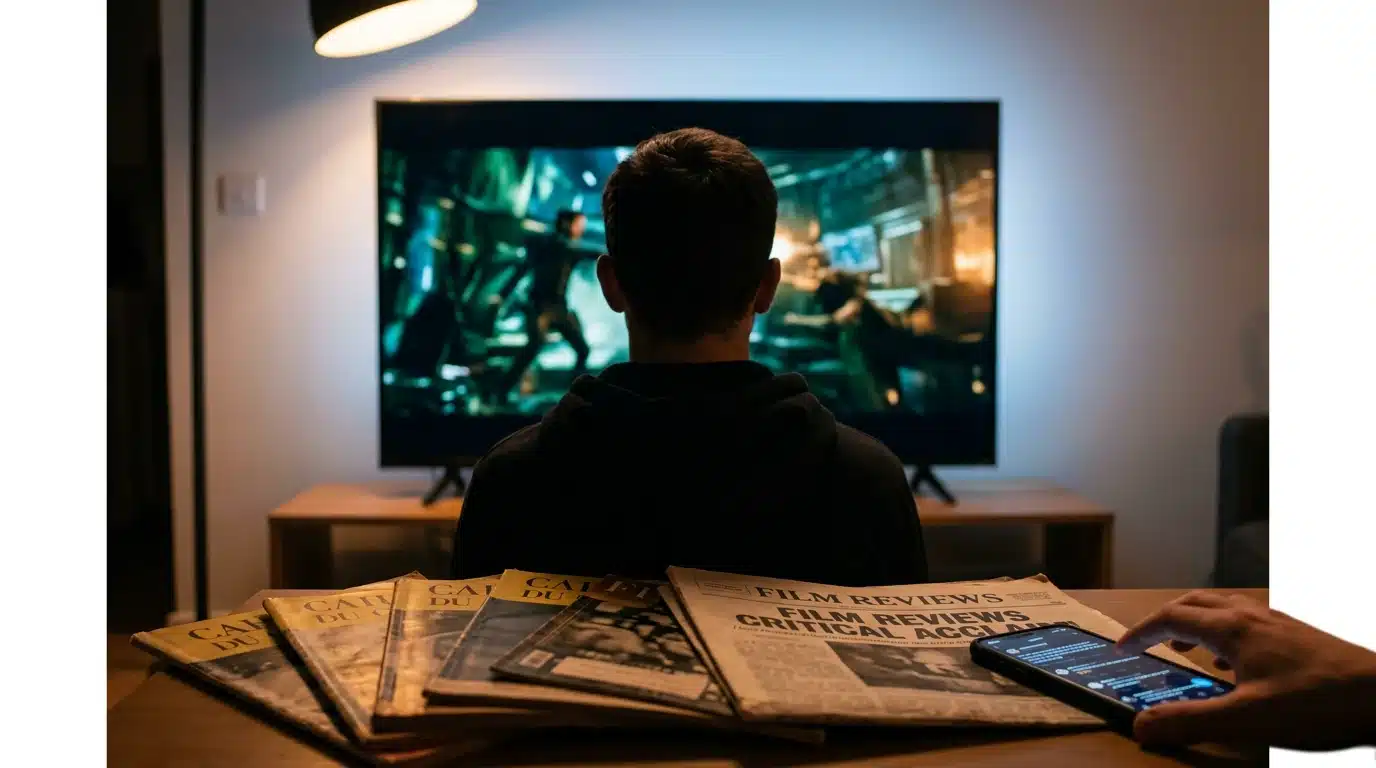
So, you’re drowning in opinions. Every show and movie release is met with a tidal wave of hot takes, scores, and critiques, making it tough to decide what’s actually worth your time. The sheer volume of feedback can feel overwhelming, but learning to filter it effectively is a key part of modern media literacy. It’s not about finding the “right” opinion; it’s about finding the right voices for you.
Understanding the landscape of criticism helps you appreciate the art form on a deeper level. You begin to see beyond just the plot. This skill transforms passive viewing into an active, engaging experience.
Decoding Review Aggregators: Beyond the Score
Sites like Rotten Tomatoes and Metacritic are often the first stop for audiences, but their scores can be misleading if you don’t know what they represent. The Tomatometer, for instance, isn’t an average quality score; it’s the percentage of approved critics who gave the film a generally positive review. A film with a 95% score could be full of critics who thought it was just pretty good (a 6/10), while a film at 75% might have more passionate, rave reviews mixed with some negative ones. It’s just a number.
Metacritic offers a weighted average, which provides a bit more nuance by assigning different importance to critics based on their stature. Yet, what most people miss is the massive divergence that can occur between critics and audiences. A study from the University of Southern California’s Annenberg Inclusion Initiative found that audience scores for certain genres can differ from critic scores by as much as 30 percentage points. This often highlights a gap in taste or cultural relevance. An aggregator is like a weather forecast—it gives you a general idea, but you still have to look outside to see if it’s actually raining.
Identifying Credible Voices in Criticism
Finding a trustworthy critic is less about their employer and more about their consistency and transparency. A great critic doesn’t just tell you if a movie is “good” or “bad”; they explain why they feel that way, articulating their arguments with specific examples from the film. They have a clear perspective and a deep knowledge of film history or a particular genre that informs their analysis. But who decides what makes a voice “credible” anyway?
Look for critics whose tastes—even if they differ from yours—are consistent and well-defended. Following a few trusted voices over time helps you build a frame of reference. When they praise a film you end up disliking, you can understand their reasoning, which sharpens your own critical thinking about the latest in celebrity and film trends.
The Rise of Niche Critics
Legacy publications no longer hold a monopoly on criticism. The internet has enabled a new generation of niche critics on platforms like YouTube, Substack, and podcasts who specialize in everything from low-budget horror to Scandinavian noir. These creators often bring a specific cultural or academic lens to their work that you won’t find in mainstream outlets. They might analyze a film’s costume design with the precision of a fashion historian or break down its score like a music theorist.
This specialization allows for much deeper analysis. A YouTuber focusing solely on sci-fi can compare a new release not just to Star Wars but to obscure 1970s dystopian films—a level of detail that a generalist critic simply can’t match. These voices are primary for fans of specific genres who want analysis that goes beyond a surface-level summary.
Developing Your Own Critical Eye
Ultimately, the goal is to become your own best critic. Engaging with professional reviews should be a way to challenge and refine your own opinions, not replace them. Forming your own take involves moving past the initial emotional reaction and asking more structured questions about what you just watched. It requires a bit of effort, but it makes the viewing experience far more rewarding.
Before you check the consensus, try running through a mental checklist to solidify your own thoughts. Consider these starting points:
- Theme and Message: What was the film or series trying to say? Did it succeed in conveying its message, and was that message compelling?
- Narrative and Pacing: Did the story structure make sense? Was the pacing effective, or were there parts that dragged or felt rushed? Understanding the narrative style is key.
- Character Development: Were the characters believable and consistent? Did they have meaningful arcs or were they just plot devices?
- Technical Elements: Think about the cinematography, sound design, editing, and performances. How did these technical aspects contribute to—or detract from—the story? (This is often where amateur and professional opinions diverge most).
- Personal Connection vs. Objective Quality: Can you separate your personal enjoyment from a more objective assessment of the film’s craft? It’s perfectly fine to love a “bad” movie, but it’s useful to know why.
Building this skill doesn’t happen overnight. Your taste will evolve as you consume more media and read more diverse criticism, creating a feedback loop that constantly refines how you see the art of storytelling on screen.
The Future of Critique: Trends and Predictions
The old guard of film criticism is officially on notice. For decades, the process was simple: a critic watched a movie and published their take for the masses to read. That one-way street is now a multi-lane superhighway, with new technology and global voices changing the entire game. The very definition of a “review” is up for grabs.
Artificial intelligence is already making its presence felt. AI can analyze audience sentiment data from thousands of social media posts in seconds, offering a raw snapshot of public opinion. What most people miss is that its role isn’t to replace the human critic. Dr. Alistair Finch, a media scholar at NYU, suggests, “AI is the ultimate research assistant. It can track thematic patterns or shot compositions across a director’s entire filmography, freeing up human critics to focus on the ‘why’ — the emotional and cultural impact.” It handles the data so we can handle the art.
The future is also interactive. Imagine a video essay where you can click on a character to follow their specific storyline, or a written review with embedded polls asking your opinion on a plot twist. This turns passive reading into an active conversation. This shift mirrors what’s shaking up celebrity culture and media consumption in general; audiences don’t just want to consume, they want to participate.
New Platforms, New Voices
Perhaps the most significant change is the decentralization of critical authority. The critic is no longer a specific person at a legacy publication. They are a TikTok creator with 2 million followers breaking down a film’s costume design, a Letterboxd user from Seoul whose witty one-line review goes viral, or a podcaster deep-diving into a show’s lore. The old model was a lecture; this new one is a worldwide book club.
This democratization brings a flood of global perspectives that were previously sidelined. A report from the Annenberg School for Communication noted that 68% of viewers under 30 now trust a creator’s video review over a traditional print source. Why? Because it feels more authentic and less filtered. Just as personal taste defines how people approach navigating today’s fashion landscape, an individual’s unique voice is now the most valuable currency in criticism.
This isn’t just about more opinions — it’s about different kinds of opinions. A blockbuster might be seen as a straightforward action flick in the US but interpreted as a political allegory in another country. These platforms allow those interpretations to collide and coexist. The challenge ahead isn’t finding a review, but navigating the endless sea of them to find voices that resonate.
Beyond the Score: The Future of Taste-Making
As we’ve seen, the role of the critic has been irrevocably transformed from a gatekeeper of taste to a conversation starter in a crowded digital room. But what does the next evolution look like? As recommendation algorithms become more advanced, predicting our desires with unnerving accuracy, we have to ask: will the ultimate critic be human at all? It’s conceivable that the most trusted ‘voice’ in the future won’t be a person, but a personalized AI that has learned our unique cinematic DNA. Will we trade the curated insights of a human critic for the cold, calculated perfection of an algorithm that never suggests a film we won’t like? Perhaps the final frontier of criticism isn’t about finding the right opinion, but questioning whether we want our tastes challenged or simply satisfied.
Frequently Asked Questions
How do professional critics stay objective?
True objectivity is a myth, as every critic has personal experiences and preferences. Instead, professionals strive for fairness and transparency by acknowledging their biases. They focus on analyzing a film’s technical execution, narrative structure, and performances, separating their personal taste from a methodical assessment of the craft.
What’s the difference between a film critic and a film blogger?
Traditionally, critics were employed by established media institutions, while bloggers were independent creators. Today, these lines are blurred. Many influential critics now operate on platforms like YouTube or Substack, combining journalistic rigor with a personal brand, making the platform less important than the quality and consistency of their analysis.
Can a bad review ruin a film’s success?
It’s unlikely that bad reviews alone can sink a major blockbuster, which is often protected by a massive marketing budget. for smaller independent films or dramas seeking awards, poor critical reception can be devastating, deterring audiences and significantly harming long-term box office performance and cultural legacy.
How has social media changed the way films are critiqued?
Social media has democratized and accelerated film criticism, transforming it into a real-time, global conversation. It has elevated audience scores and a diverse array of new voices while often prioritizing immediate, viral “hot takes” over the more nuanced, long-form analysis that was once the standard.
Are there ethical guidelines for film and TV critics?
Yes, most professional critics follow a code of ethics, whether formal or informal. Key principles include avoiding spoilers without clear warnings, refusing gifts or special treatment that could compromise their judgment, and being transparent with their audience about any potential conflicts of interest, such as personal relationships with filmmakers.